

Modern public safety requires tools that allow officers to control situations without immediately escalating force. Agencies are expected to resolve
incidents efficiently while reducing risk to everyone involved. This has driven the adoption of more advanced, less-lethal de-escalation tools that provide control without unnecessary harm.
One of the most effective developments in this category is PepperBall technologies. By combining controlled impact with an irritant payload, it gives officers a practical option for influencing behavior at a distance. The result is a system that supports safer outcomes while maintaining operational reliability.
This article sheds light on the PepperBall irritant system, how its projectiles function, why it continues to outperform traditional kinetic impact projectiles used in the field today, and more.
What Is Kinetic Irritant Technology?
Kinetic irritant technology combines physical impact with chemical agent delivery in a single deployment. A projectile is launched toward a subject or surface, delivering enough force to gain attention while simultaneously releasing an irritant effect or payload through a chemical component that affects the eyes, skin, and respiratory system.
This dual mechanism creates both physical disruption and sensory impairment, improving reliability and compliance across a wider range of subjects and conditions without requiring close contact. Older kinetic impact projectiles work only by striking a person and causing enough pain or discomfort that they stop what they’re doing.
At the core of PepperBall technology is the frangible sphere. These projectiles use a frangible design that releases an irritant payload on impact, combining physical disruption with chemical effects. This approach separates it from traditional systems that rely on force alone.
In a nutshell, the PepperBall irritant system is built for consistency. It performs the same way every time.
That reliability matters in the field. It allows teams to train with confidence. It supports predictable outcomes during deployment.
How PepperBall Projectiles Break and Disperse PAVA Powder
A round is deployed. It travels fast. It stays on course. Then it hits. The shell breaks on impact. It does not penetrate. It does not bounce away. Instead, it ruptures, creating an expulsion effect. A fine PAVA powder is released. This compound is similar to OC (oleoresin capsicum). PAVA is one of the six major capsaicinoids found in pepper plants and is a naturally occurring substance. It is designed to irritate fast. The effect is immediate. A cloud forms at the point of contact. It spreads outward in a tight pattern. Direct hits are effective. Near impacts also work. The cloud reaches the subject. Behavior changes quickly.
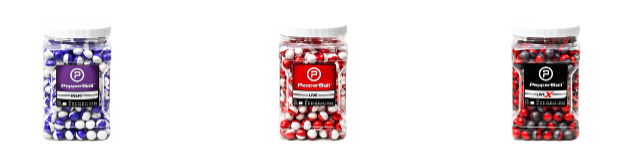
Projectile variants serve different needs. Some are for live deployment. Some are for training. Each is built for consistency.
This flexibility matters. It allows kinetic impact projectiles to adapt. Teams can respond to varied scenarios.
Why Standoff Distance Matters in Modern Policing
Distance is critical. It shapes how an encounter begins. And how it ends as well. When officers are too close, tension rises fast. Decisions shrink to seconds. Options become limited.
Now consider the alternative. An officer holds position at the range. There is space to assess. There is time to respond. This is where PepperBall systems come in. They are built for distance. They allow early engagement. They reduce the need for close contact.
An officer can act before a situation turns physical. Positioning improves. Responses become more controlled. Safety is assured with distance. This is no hypothesis. It is reflected in real-world data. Reports from the National Law Enforcement Officers Memorial Fund show a clear pattern. Many assaults happen up close. Within very close reach. In moments where space no longer exists.
Creating distance breaks that pattern. It lowers exposure. It reduces immediate threat. It also changes how force is applied. Direct physical tactics become less necessary. Escalation becomes less likely. Instead, officers can rely on less-lethal de-escalation tools. These manage behavior from a safer position.
They maintain control without closing the gap. This can be crucial. For officers. For subjects. For outcomes.
PepperBall vs. Other Less-Lethal Tools
Less-lethal tools perform differently. Some require proximity. Others depend on perfect conditions. PepperBall systems offer something different. They combine reach with control. They extend influence without increasing risk. That difference gives them a clear operational edge.
OC Spray Limitations
OC spray requires close proximity and is more heavily influenced by environmental conditions such as wind and movement. Additionally, when OC spray is used, it not only affects the intended subject but can also unintentionally have an effect on the officer deploying it.
The PepperBall irritant system allows officers to deploy an irritant from a greater distance with more controlled application, reducing many of these limitations.
Impact Munitions
Traditional impact rounds depend on precise targeting and direct energy transfer. While effective, they carry a higher risk of injury if placement is not controlled. In fact, even when everything is done correctly and impacts occur in the proper training zones, there have been documented cases of catastrophic results including up to death when using traditional less lethal impact munitions.
Kinetic impact projectiles used in PepperBall systems are designed to break on contact rather than deliver sustained force. This shifts the outcome toward a combined physical and sensory response.
Conducted Energy Devices
Conducted energy devices require proper probe placement and are typically limited to individual targets. Their performance can be affected by clothing and movement.
PepperBall systems provide broader flexibility. They work in a wider range of scenarios. For example, in situations involving multiple individuals or movement within a defined area.
Across these comparisons, PepperBall technology stands out for balance. It complements other less-lethal de-escalation tools. It also expands operational options.
What Agencies Should Evaluate When Selecting PepperBall Systems
Choosing a system needs careful review. Every part must perform in real conditions. No room for guesswork.
Launcher Compatibility
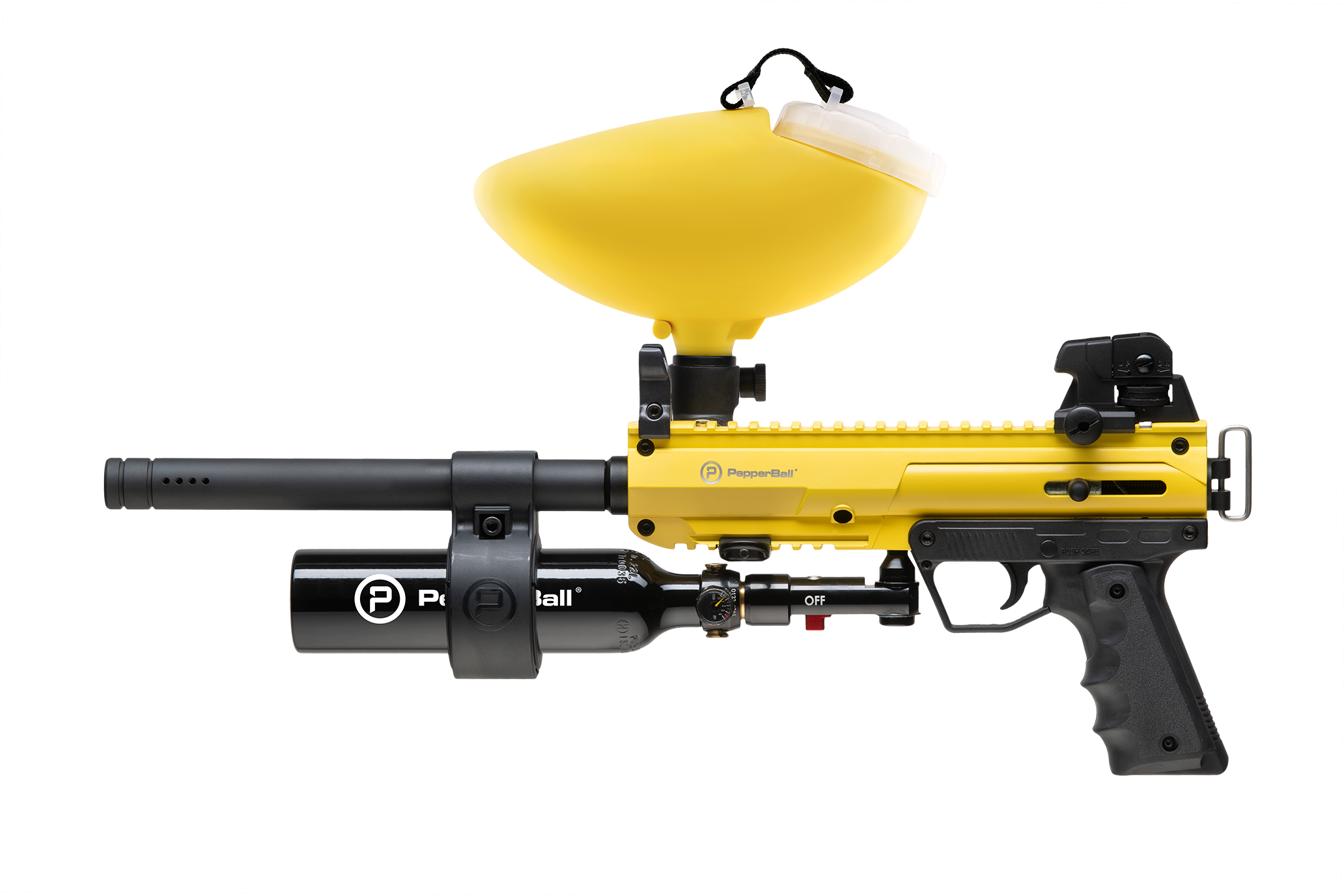
Launchers vary in size. They differ in capacity. They use different power sources. Some fit patrol work. Others suit tactical teams. The right choice depends on the mission. Agencies must match the platform to the job.
Projectile Selection
Projectile type directly affects performance. Live rounds are used in the field, while inert rounds support training. Choosing the right combination ensures the system functions as intended.
Training Requirements
Proper training is essential for effective use. Officers must understand deployment distances, environmental considerations, and policy guidelines. Training ensures that kinetic impact projectiles are used safely and appropriately.
Conclusion
Kinetic irritant technology marks real progress. It brings control without excess force. It blends impact with dispersal. It works when situations turn unstable. It delivers consistent results across environments. Indoors. Outdoors. Close range. From a distance. It gives officers space and time. It reduces escalation. It improves outcomes for everyone involved.
For agencies, the choice becomes clearer. They need tools that work. They need tools they can trust. PepperBall technology meets that standard. It supports safer, more effective responses. It strengthens any professional toolkit.
Whether it’s equipping or upgrading your team, work with a proven source. Less Lethal Products provides access to quality equipment, including essential PepperBall accessories. You also get expert guidance from certified instructors and armorers. Shop now or call for a quote.